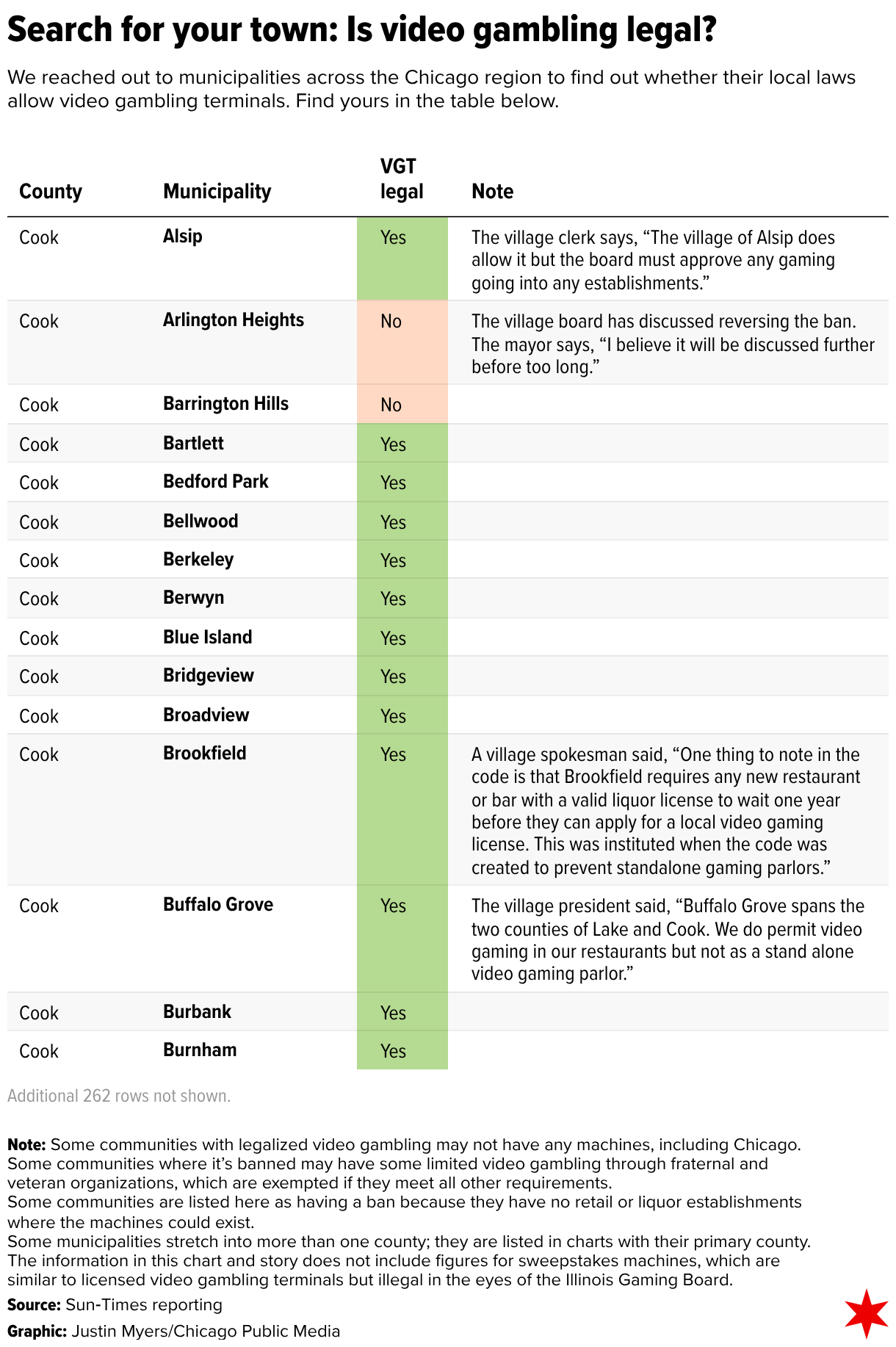
Not even 20 years ago, video gambling was illegal in the Chicago region and the rest of Illinois.
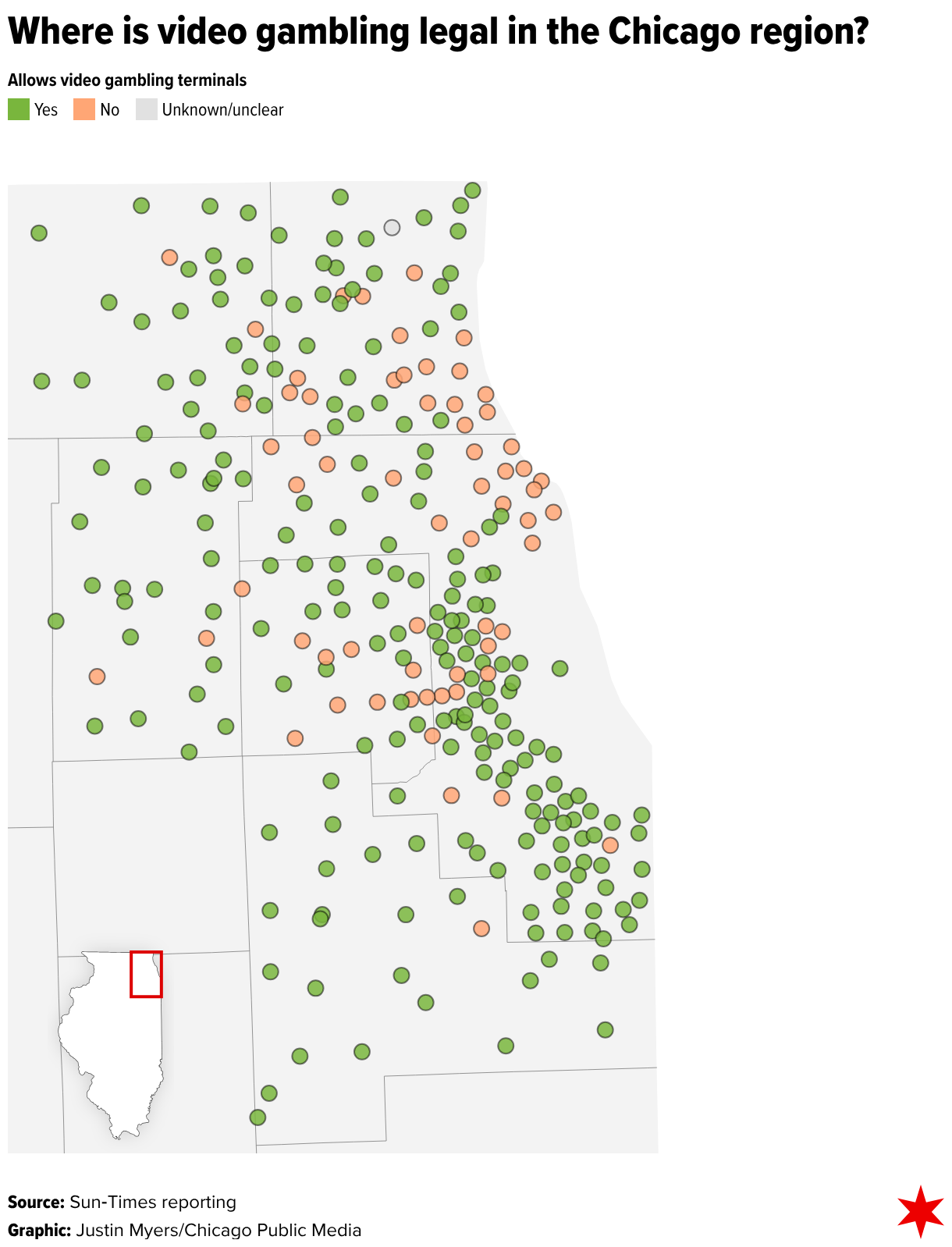
Today, nearly 80% of the six-county metropolitan area has legalized video gambling, a level of saturation that means more than 200 municipalities now allow it to varying degrees, while more than 60 communities ban the machines, according to a Chicago Sun-Times examination that also found:
There’s “no video gambling in Wayne,” said Patti Engstrom, the village clerk in the far west suburb. “We have no public gathering areas, no gas stations, no mini marts, no bars, no restaurants, no commercial whatsoever. We are an equestrian community. We have horses, not commercial businesses.”
For many years, video gambling devices were allowed in Chicago-area establishments only if they were used for “amusement” purposes and didn’t pay winnings — though many illicitly did in concert with the mob that controlled much of that underground industry.
An Illinois law legalizing video gambling terminals, or VGTs, was enacted in 2009, and the machines went live for “patron play” in September 2012.
“At the end of 2012, Illinois had 2,290 terminals generating $12.3 million in revenue,” according to a report from the Illinois Municipal League, which represents local governments.
“By 2025, the state had more than 49,000 terminals producing $3.19 billion in net terminal income revenue, resulting in nearly $1.12 billion in tax revenue, including $160 million distributed to municipalities and counties, and significant profits for video gaming establishments and terminal operators.”
The Illinois Gaming Board reports as of early September, “there are 8,799 video gaming locations and 50,049 VGTs and Illinois remains the largest regulated, distributed video gaming network of its kind in the world.”
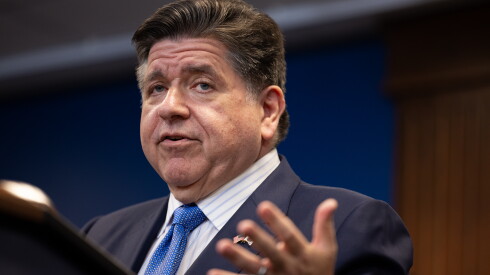
Regulating gambling statewide, the government agency reports to Gov. JB Pritzker, who declined to say whether he believes video gambling has become too ubiquitous in Illinois — and brings about too many negative impacts.
Beyond gambling addiction, the vastness of video gambling also has the potential to normalize gambling for children, who are exposed to marketing. Studies show many who gamble are those who can least afford it. And video gambling is fueling a crime wave of after-hour burglaries at establishments with the machines.
“I was born here in 1980, I was living here when they were authorized, I’ve got 40 years of sort of a time lapse to watch,” said Ben Huizenga of the nonprofit Stop Predatory Gambling Illinois. “It has absolutely changed the face of our region, it’s changed what people do with their time.
“It’s really this kind of invisible parasite on the economy in Illinois.”
A trade group representing the video gambling industry didn't return calls.
Pritzker became governor in early 2019, so he didn’t sign the legislation legalizing video gambling.
But the billionaire Democrat who's toying with a presidential run did sign other legislation that vastly expanded other types of gambling in Illinois, from sports wagering to new casinos.
Running for a third term in the Nov. 3 general election, Pritzker’s personal investments have included gambling assets over the years, with a past interest in casinos in Elgin, Indiana, the Niagara Falls area and possibly beyond.
A spokesman for Pritzker’s Republican opponent, Darren Bailey, said local governments “have the ability to opt in” or out of video gambling and “regulate the number of VGTs” and, if elected, he “would keep it that way.”
Asked whether video gambling has expanded too far, a gaming board spokeswoman said: “Opining or speculating about economic trends in gaming markets and issues involving video gaming saturation are beyond the scope of the IGB’s regulatory and law enforcement mission. The IGB does not conduct market forecasting, provide analysis of economic trends in the Illinois gaming industry, or opine about potential market saturation.”
Huizenga said, “I’d say we’re actually at the point that we have about as many VGTs as Illinois can absorb.
While VGTs are regulated, there are similar devices, called sweepstakes machines, that are largely unregulated and located throughout the region, much to the chagrin of the gaming board.
The agency's "view is that 'sweepstakes' machines are illegal gambling devices that lack supervision by any regulatory body, have no oversight or licensing of any of the establishments, operators or associated individuals," the spokeswoman said. "Sweepstakes machines have no taxation, accounting or operational transparency, and they lack patron protections."
It's unclear how many of them exist.
Evanston has sweepstakes machines and is among the communities considering legalizing, regulating and capping them, local officials said.
Even if towns legalize VGTs, the establishments still have to pass muster with the gaming board.
Joliet has the most VGTs of any municipality in the region, with 561 in more than 100 establishments, gaming board records show. Only Springfield, the state capital, has more statewide, with 835 machines. Cicero, a west suburb, has 446, the second largest total in the metro area, records show.
The devices were legalized in Chicago last year against objections from Mayor Brandon Johnson and the developers of the Bally’s Chicago casino, who feared the gambling devices would cannibalize the local market.
The machines have yet to go live within the city, a City Hall spokesman said.
Municipalities have been able to allow or ban video gambling from the start, and many of them legalized it because of the expectation of steady revenue. They get a cut of the gaming taxes, as does state government, while the establishments hosting the machines and the companies providing them also share in the income.
In 2026 alone, through August, Illinois municipalities collectively took in more than $111 million in tax revenues from video gambling, while the state reaped nearly $685 million, records show.
The net terminal income was more than $2 billion, records show.
With all that money in play, some municipalities believe their share is too light, such as Robbins, a south suburb that includes many low-income residents and, so far this year, has taken in around $33,000 in gaming tax revenue.
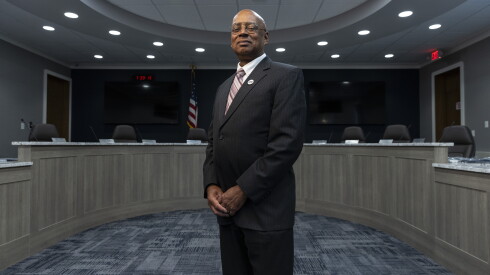
“There’s some exploitation going on somewhere,” said Darren Bryant, the mayor of Robbins, where there are roughly 4,600 residents and a median household income of around $40,000 a year, nearly half of neighboring Crestwood. “The state should increase the municipality share.”
Some communities have tried for more revenue by pursuing a “push tax” that puts an additional fee on each button push on a video gambling terminal, but the industry has fought this hard.
Bryant said: “I’m not the biggest proponent of gaming” largely “because of its impact on residents.”
He added, “When you don’t need the revenue, you’ve got better options.”
By contrast, Joliet brought in nearly $2 million last year in video gambling tax revenue, according to gaming board records that show the top grossing location in Illinois in 2025 was a gas station in Forest View. The net terminal income there was more than $4 million, up over 15% compared to the prior year.
Some communities believe video gambling has become too saturated within their boundaries and have started to impose limits.
North Chicago is among them. Greg Jackson, chief of staff to Mayor Leon Rockingham Jr., said, “We didn’t want to be known as a little Vegas,” so decided to “reduce the amount of gaming in town” in favor of “other economic development opportunities.”
“We are going to” continue to “allow gaming, but it’s going to be very controlled,” Jackson said.
For instance, at least two-third of revenues from any establishment with video gambling now has to come from something besides the devices. So for a restaurant or bar, that probably means food and drink. And officials will no longer allow new licensees to be situated next to others, to avoid clustering.
“We know we’re going to lose some revenue” initially, but hopefully, it’ll be “made up” down the road, Jackson said. "It's all about quality of life."
In neighboring Waukegan, there's a casino and more than 300 VGTs, records show.
Meantime, other communities without video gambling have reversed course or have toyed with the idea.
Video gambling is banned in Arlington Heights, but local leaders have discussed whether to make it legal. One village official said this has nothing to do with the prospect of the Bears moving from Chicago to the northwest suburb.
Skokie, a north suburb, doesn’t permit video gambling, but the village board “discussed the topic ... in June and staff were directed to complete further research on the topic to inform any future conversations,” a spokesman said. “At this time, there are no formal proposals being considered by the village board.”
Downers Grove officials repealed an ordinance allowing gambling after a 2024 referendum.
La Grange Park village board members "last revisited this issue" in 2023 when they "voted unanimously to uphold Ordinance No. 914, which prohibits video gaming" in the suburb, according to village manager Julia Cedillo.
In Will County, Frankfort “does not allow it with its corporate limits with the exception of the VFW, which is allowed by state law,” said Frankfort village administrator John Burica, referring to an exemption in the gambling statute that allows veteran and fraternal organizations to have video gambling no matter where they are, so long as meet all other requirements.
“There are several video gaming machines in establishments located in unincorporated Frankfort, which is under Will County jurisdiction,” Burica said.
Frankfort is among the last communities in Will that hasn't legalized video gambling.
Unincorporated areas of all six counties now allow it, including DuPage County where it was legalized for its unincorporated territory in 2019.
Lake County Board Chairwoman Sandy Hart, a Lake Bluff Democrat, wishes her county government "had greater control over the number of video gambling seats" in her unincorporated areas.
"As it stands now, if you give them a liquor license you don't have any oversight over video gaming," Hart said.
It was legalized in unincorporated Lake County more than a decade ago, before she was in office, and “when I became board chair, I was like, we’re going to overturn it,” Hart said. "We were essentially going to put a moratorium on it."
But she said the effort was blocked.
"What is sickening is the expansion of video gaming and the funding of government in this way," Hart said. What's more, "we in the counties really have no oversight, but the municipalities do if they're home rule."
Bolingbrook banned video gambling for years, until recently, when it was legalized following an advisory referendum that showed most residents of the far southwest suburb approved some level of video gambling.
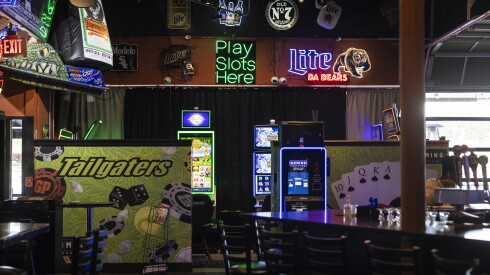
The first establishment licensed, Tailgaters Sports Bar & Grill, is working with a company called Gaming Productions to provide the machines.
Run by banker and attorney James Banks, Gaming Productions was initially prevented by the gaming board from getting a license because of unspecified character concerns.
The regulating agency then reversed itself and gave Gaming Productions a license, though the agency’s administrator Marcus Fruchter won’t go into details about the about face, citing privacy provisions.
Not long after the Bolingbrook village board reversed the decision, Banks’ company gave a $10,000 contribution to the local mayor — illustrating another dynamic since video gambling was legalized: how much money has been injected into local politics by the industry.
“We have absolutely nothing to do with the companies establishments choose,” said Bolingbrook's mayor, Mary Alexander-Basta, who didn't vote on the legalization.
She described herself as agnostic about allowing gambling in town but supportive of the referendum testing public support that preceded the change.
Even with it legalized, Alexander-Basta said, video gambling will be allowed "on a very limited basis."